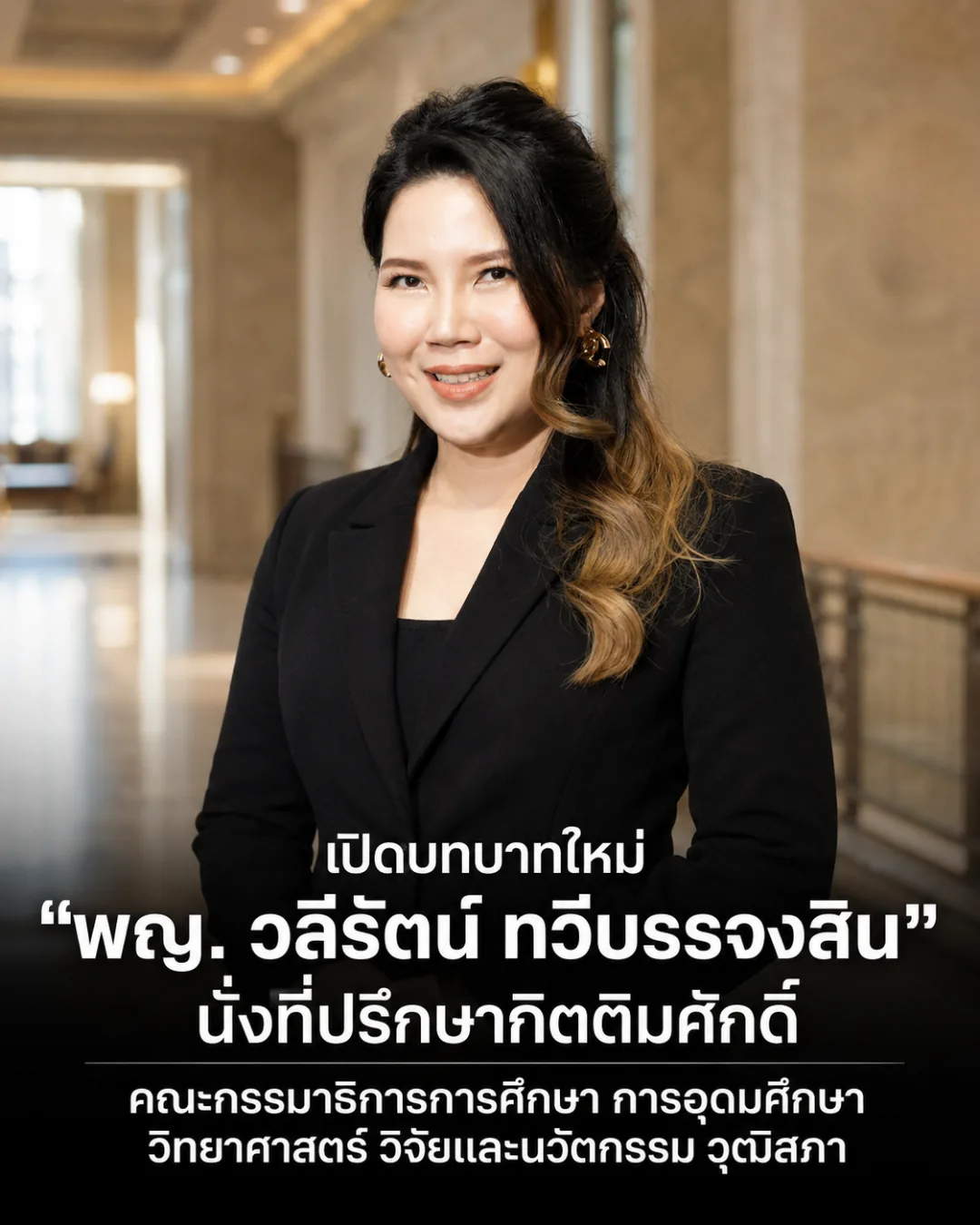
Another Hat: Sharing a Doctor's Perspective on Education
In 2024, Dr. Waleerat Thaweebanchongsin (Dr. Gwang) was honored to be invited to serve as an Honorary Advisor to the Senate Standing Committee on Education, Higher Education, Science, Research and Innovation. It is a role she accepts quietly — another hat to wear alongside her daily work as a clinician — and a chance to listen, learn, and contribute where she can.
"I'm not a policymaker. I'm a doctor who happens to care deeply about how we teach the next generation. If sharing what I see in practice is useful to those who shape education and research policy, I'm grateful for the chance to help." — Dr. Waleerat
About the Committee — Senate of Thailand (official site)
Why Education, Why Now
This appointment is less about a new title and more about a long-standing interest. For many years Dr. Waleerat has spent time mentoring younger physicians, hosting hands-on training, and writing patient-friendly explanations of procedures. Education — both of doctors and of patients — has always sat next to clinical work, not above it.
The Committee's remit covers a broad landscape: higher education, scientific research, and innovation. Dr. Waleerat's contribution is narrow and specific — sharing what a practicing aesthetic physician observes, when invited to do so.
What She Hopes to Bring
Rather than prescribing answers, the goal is to bring a clinician's everyday perspective into conversations that often happen far from the consultation room:
- What younger doctors are asking for in terms of practical, hands-on training
- What patients find confusing about consent, expectations, and aftercare
- Where evidence is still thin for treatments commonly performed on Asian faces
- How safety culture actually feels day-to-day in a busy clinic
These are observations, not policy positions. The hope is simply that lived experience can inform discussion when it is helpful.
On the Role Itself
The honorary advisory role is unpaid and non-political. Different committees and different periods of work involve different rhythms — meetings, written input, attending hearings — and the exact shape of contribution depends on what the committee is working on at any given time. Dr. Waleerat is one of many voices around the table, and the work of the Committee belongs to its members and the Senate itself.
What she can promise is to show up, listen carefully, and share honestly when asked.
Another Hat, Same Person
Patients sometimes ask whether this changes anything at the clinic. The honest answer is: not really.
- Clinical hours, the careful pace of consultations, and the same conservative philosophy continue as before.
- The advisory work happens around the edges — reading, attending sessions, occasionally writing.
- If anything, the role is a reminder of how much there still is to learn from colleagues, educators, and patients themselves.
Education has always been the thread that runs through the work — teaching residents, explaining procedures slowly, writing for patients who don't speak medical language. This new hat is a continuation of that thread, in a wider room.
A Quiet Thank You
Dr. Waleerat is grateful to the senators and committee members who extended the invitation, to the colleagues who continue to teach her, and to the patients who trust her with their care. Whatever small contribution she can make to the conversation about Thai medical education is offered in that spirit — humbly, and with the hope of being useful.
Reference: